Let’s Talk Ingrowns: What Causes Them and How to Prevent Them

Ingrown hairs, especially in the bikini area, are far more common than most people realize and they’re something that should be talked about more openly. Because they happen in such a personal area, they often go unmentioned, even though so many people experience them regularly.
For many people, ingrown hairs aren’t just a minor annoyance. They can feel uncomfortable, tender, and sometimes even painful 😣. On top of that, they can lead to feelings of insecurity or self-consciousness, making you think twice about certain outfits or booking hair removal services. When ingrowns keep coming back, it’s easy to feel frustrated or unsure of what actually helps.
In this post, we’re breaking down ingrown hairs in a clear, yet supportive approach. We’ll chat about what they are, why they tend to show up, and how everyday habits and hair removal choices can play a role. Most importantly, you’ll walk away with realistic tips to help prevent and manage ingrowns so your skin feels calmer, smoother, and a lot more comfortable.
What is an Ingrown Hair?
If you’ve dealt with ingrown hairs before, you are likely familiar with how they look and feel but what exactly are they and why do they form?
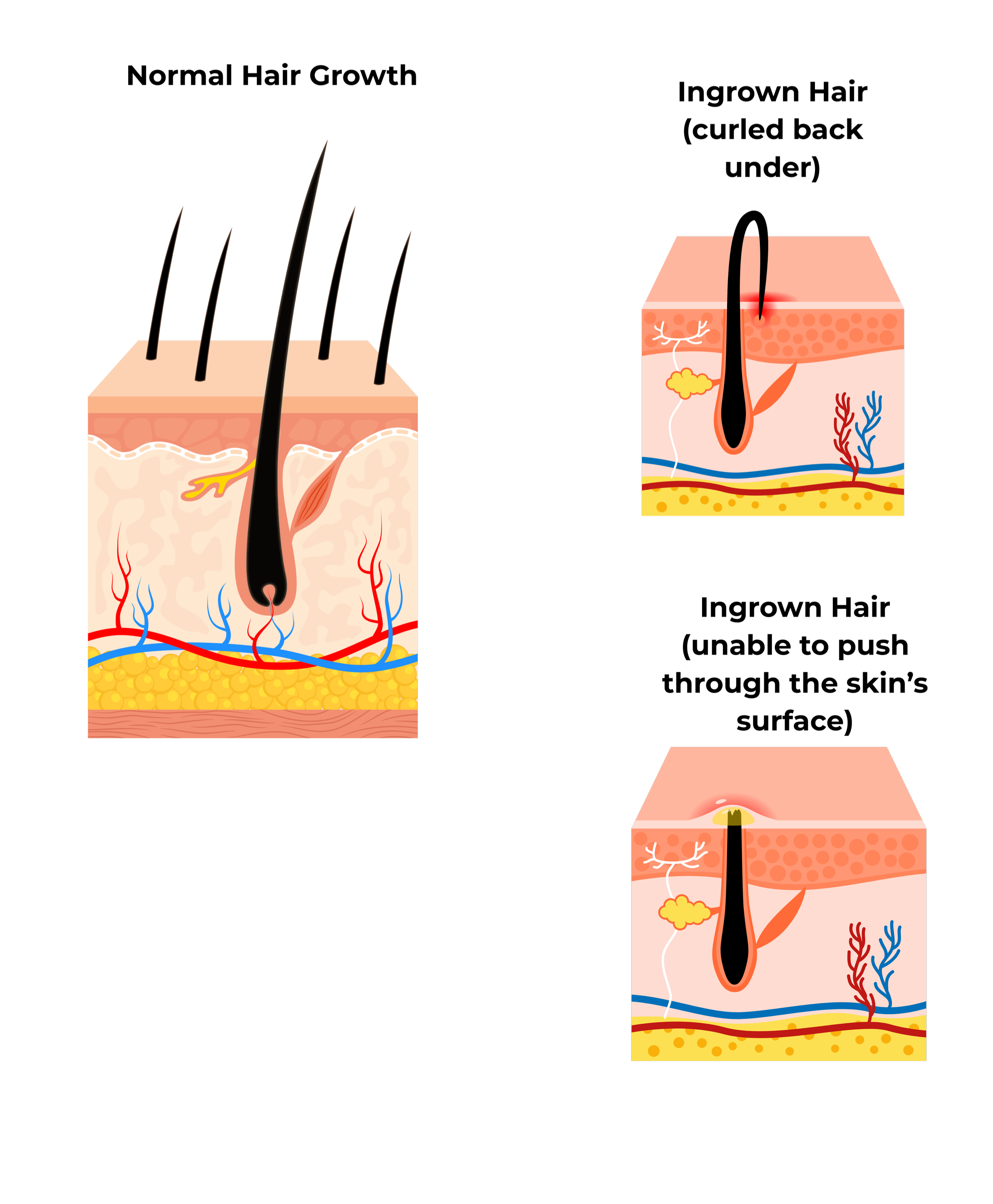
An ingrown hair occurs when a hair grows back into the skin instead of rising up and out of the follicle. This usually happens when the hair becomes trapped beneath the surface due to dead skin buildup or because the hair naturally curls back on itself. When the hair can’t break through the skin, it continues growing underneath, which triggers inflammation. That’s why ingrown hairs often appear as red, irritated bumps and can feel tender or sore to the touch. The diagram below shows a cross-section of the skin, highlighting the difference between normal hair growth and an ingrown hair.
Why Ingrown Hairs Happen
Ingrown hairs usually happen because of a combination of factors, rather than just one single cause. Some of the most common contributors include:
Hair type: Coarse, thick, or curly hair is more likely to bend or curl back into the skin as it grows.
Skin type: Dry, sensitive skin or a buildup of dead skin cells can block the follicle opening and trap the hair underneath.
Dead skin buildup: When the skin isn’t exfoliating naturally or regularly, hairs have a harder time breaking through the surface.
Hair removal methods: Shaving, waxing, and sugaring can all influence how hair grows back, increasing the chance of ingrowns for some people.
Friction: Tight clothing, workouts, and snug underwear can rub against the skin and push new hair growth back into the follicle.
Often, it’s the combination of these factors that leads to recurring ingrowns, especially in areas like the bikini line where friction and hair texture play a bigger role.
How to Prevent Ingrown Hairs
Preventing ingrown hairs is all about supporting healthy hair growth and keeping the skin clear, calm, and hydrated. While no method is completely one-size-fits-all, consistent care and the right treatments can significantly reduce how often ingrowns show up and in some cases, prevent them almost entirely.
Here are some of the most effective ways to help prevent ingrown hairs:
Exfoliate regularly (but gently): Removing dead skin buildup helps keep the follicle opening clear so hairs can grow out properly instead of becoming trapped beneath the surface.
Click below to shop some of our favourite ingrown hair products ✨
👇🏼
Keep skin well hydrated: Hydrated skin stays soft and flexible, making it easier for new hair growth to break through without curling back into the skin.
Choose hair removal methods that support skin health: Waxing and sugaring can help reduce irritation when done consistently and paired with proper aftercare, while switching methods frequently can increase the risk of ingrowns.
Reduce friction after hair removal: Tight clothing, workouts, and snug underwear can irritate freshly treated skin and encourage hairs to grow inward. Giving the area time to breathe makes a big difference.
Consider laser hair removal: Laser hair removal is one of the most effective ways to reduce ingrown hairs long term. By targeting the hair at the root and gradually reducing regrowth, laser can dramatically decrease — and often eliminate — the conditions that cause ingrowns in the first place.
What to Do If You Already Have an Ingrown Hair
Even with the best prevention routine, ingrown hairs can still happen. The most important thing to remember is that how you handle them makes a big difference in how quickly they heal and whether they leave behind pigmentation or scarring.
If you’re dealing with an ingrown, here’s what to keep in mind:
Avoid picking or digging at the skin: As tempting as it can be, squeezing or trying to “dig out” the hair can push bacteria deeper, increase inflammation, and lead to dark marks or scarring.
Gently exfoliate the area: Light exfoliation can help encourage the trapped hair to work its way to the surface naturally.
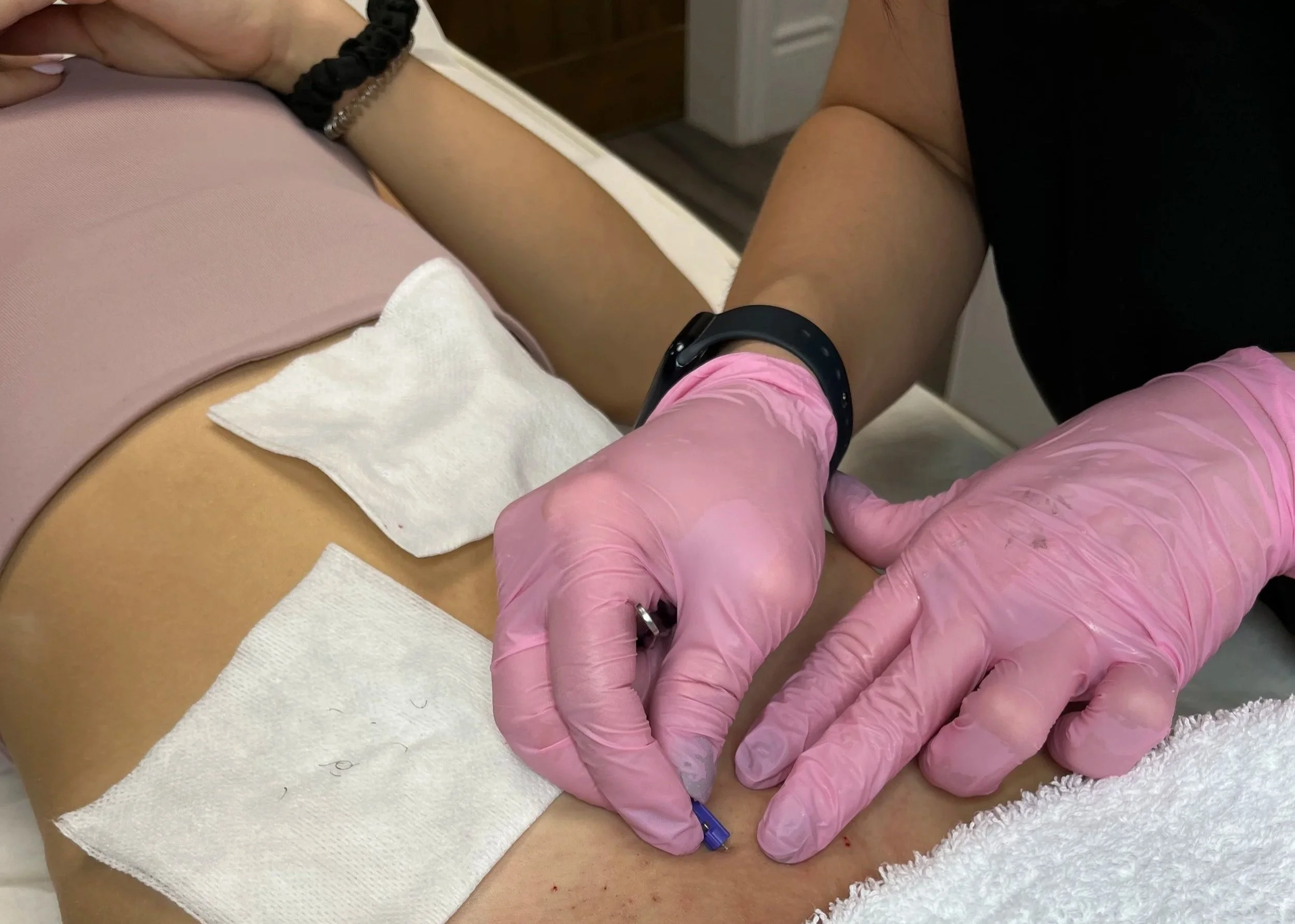
Book a professional treatment if needed: For stubborn or recurring ingrowns, professional extractions and treatments like vajacials can safely clear the area while supporting overall skin health.
Smooth Skin Is a Process
Ingrown hairs are common, especially in high-friction areas like the bikini line. Reducing them isn’t about harsh fixes — it’s about consistency and choosing methods that truly support your skin.
With the right routine and treatments like laser hair removal or targeted care such as vajacials, ingrowns can become far less frequent.
If you’re ready for smoother, more comfortable skin, explore our laser hair removal services, book a vajacial, or shop our ingrown hair products to get started.